
Hypermobility and PoTS
Hypermobility Spectrum Disorder (HSD) and hypermobile Ehlers-Danlos Syndrome (hEDS) are commonly associated with PoTS and have therefore been included in the new Canadian PoTS classification within the PoTS Plus category, as can be seen here.
In fact, a worldwide survey undertaken in 2020 which recruited people with PoTS identified that 31% of participants were classified as having hEDS, and that 55% of participants met the criteria for being hypermobile.
Hypermobility and Hypermobility Syndromes
Hypermobility is the ability to move a joint beyond a normal range of motion which can lead to a variety of symptoms including joint instability, persistent pain, and recurrent injuries. There are also a number of factors that can influence hypermobility including:
- Age
- Sex
- Ethnicity
- Exercise training
- Previous or current injury
- The presence of medical disorders or syndromes that cause joint tissue laxity
- Hormones, both natural and synthetic
Joint hypermobility is common in young children but can continue through to adulthood. It is also more common in women, as well as in individuals of Asian and African descent. Presentations can vary from person to person and it is possible for someone to have one joint that is affected, or several joints that are affected. For many people, hypermobility does not cause any problems and can even be an advantage in some sports and performing arts. However, others may experience pain, tiredness and other symptoms, which may lead to a diagnosis of HSD, hEDS or one of the rarer hereditary disorders of connective tissue, such as Classical Ehlers-Danlos Syndrome or Marfan Syndrome. HSD and hEDS are the most common hypermobility related conditions.
HSD and hEDS have replaced the following terms previously used:
- Joint hypermobility syndrome
- Benign joint hypermobility syndrome
- Ehlers-Danlos (hypermobility type)
- Ehlers-Danlos type III
Identifying hypermobility – Beighton Scale
A 9-point scoring system called the Beighton Scale is used to assess a variety of different joints and determine if these joints are considered to be hypermobile or not.
1. Little fingers – with the hand flat on a table, palm down, can you lift your little finger tip up to the ceiling (extension) to about 90 degrees? One point for each little finger.

2. Thumb: can you place your thumb to your forearm? One point for each side.

3. Elbows – with arms out straight, palms up towards the ceiling, does your elbow bend/extend beyond a straight line by more than 10 degrees. One point for each side.


5. Spine: standing with your legs straight, can you place the palms of your hands flat on the floor? One point for yes.
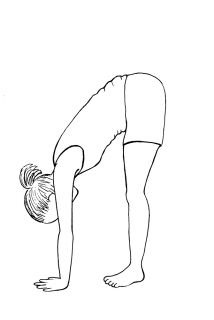
The 5-part hypermobility questionnaire can also be used to identify generalised joint hypermobility. If you answer yes to two or more of the following questions, there is a good chance that you have generalised joint hypermobility.
- Can you now (or could you ever) place your hands flat on the floor without bending your knees?
- Can you now (or could you ever) bend your thumb to touch your forearm?
- As a child did you amuse your friends by contorting your body into strange shapes OR could you do the splits?
- As a child or teenager did your shoulder or kneecap dislocate on more than one occasion?
- Do you consider yourself double-jointed?
Symptoms associated with HSD and hEDS
Musculoskeletal issues are those which affect the muscles, bones, joints, tendons, ligaments and other soft tissue structures and may include:
Musculoskeletal
- Joint and muscle pain
- Muscle weakness
- Unstable joints prone to injuries, dislocations or subluxations (where a bone becomes fully or partially out of place).
- Poor proprioception – difficulties knowing where a part of your body is, in relation to the rest of your body (eg. tripping over your own feet, bumping into door frames and coffee tables etc)
- Flat feet
- Curvature of the spine
- Pain in the jaw joint – temporomandibular joint (TMJ) dysfunction
Skin
- Local anaesthetics may not work well
- Slow or poor wound healing
- Easy bruising
- Soft velvety, stretchy skin
- Stretch marks (striae distensae)
- Scar tissue looks indented (atrophic scar)
- Soft skin-coloured painful lumps to the heels (piezogenic papules)
Autonomic problems
- Orthostatic intolerance including PoTS and low blood pressure
Neurodivergence
Circulatory system including the heart and blood vessels
- The valves of the heart become floppy and therefore do not close properly
- The large blood vessel which takes blood from the heart to the body become widened (aortic root dilatation)
Gut problems
- Stomach pain, constipation, diarrhoea, feeling sick, food moving slowly through the gut
- Hernias – where a small piece of bowel pushes through a weak layer in the surrounding muscles and tissues
Reproductive system and the bladder
- Pelvic pain
- Pain during sex
- Urinary incontinence – where urine leaks out without your control
- Organ prolapse in children, women who have not had children, and men. This is where an organ such as the pelvic floor, rectum or uterus has flopped downwards out of its normal position
Mental health problems
- Anxiety
- Depression
- Panic disorder
Other symptoms
- Fatigue – mental and physical tiredness
- Sleep problems – which may be due to pain at night or restless leg syndrome
- Headaches
- More prone to allergies
Hypermobile Ehlers-Danlos Syndrome (hEDS)
hEDS is believed to be an inherited connective tissue disorder. As yet, no gene has been identified.
See here for diagnostic criteria
If you have any concerns regarding hypermobility, please speak to your GP or relevant healthcare professional.
For further information or support regarding hypermobility, please visit:
Share this page


This information is general information about PoTS and is not an alternative to medical advice from your doctor or other healthcare professional. You must always consult your doctor or healthcare professional.
Last review 29-07-2024
Next review 01-07-2027
Version 2